Sleep, materials and construction
Downright Down Bedding: What Fill Power and Box Construction Mean
A lofty duvet can look impressively warm. But loft is only one part of the story. Fill power describes how much space down occupies; box construction helps determine how that filling sits inside the bedding. Neither specification, by itself, tells you how warm a comforter will feel—or whether it will suit your bedroom, habits and sleep temperature.
Down bedding is often described through numbers and technical terms: fill power, fill weight, baffled box, shell fabric. They can sound like a ranking system, as if the largest number automatically points to the best night’s sleep. It does not. These details are useful when they are read together, in context. They describe materials and construction, not a universal measure of comfort.
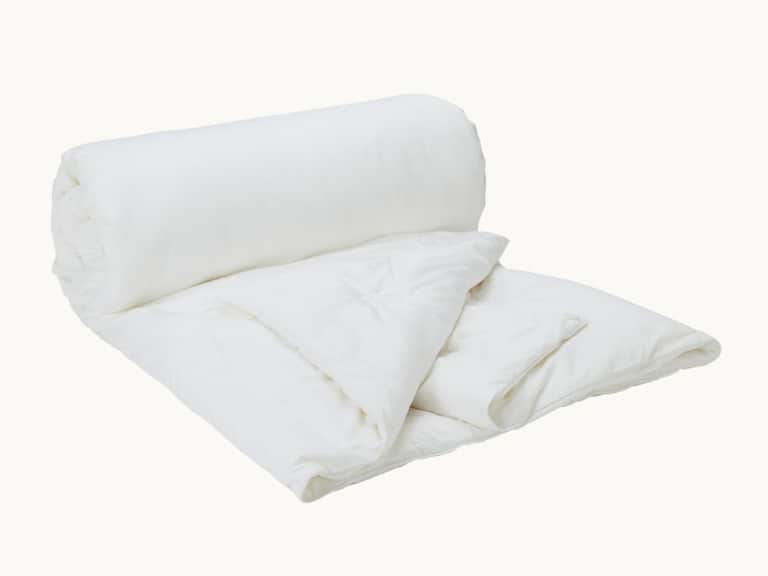
That distinction matters when considering Downright down bedding. Its Organa range, for example, combines goose down with a shell made from organic cotton and TENCEL™ lyocell, while baffled-box construction is intended to help the filling stay more evenly distributed. Those features provide clues about how a comforter is made. To understand what they might mean in use, it helps to separate the language of loft from the practical question of warmth.
In the UK, many people call the bedding layer inside a cover a duvet; “comforter” is also used, particularly in descriptions of bedding made for international markets. Whatever the name, the same basic principles apply: the filling, its quantity, the chambers that hold it, the shell and the bedroom environment all contribute to the result.
Fill power, explained without the sales shorthand
Fill power is a measure of the loft, or space, occupied by a given weight of down under a standardised test. A higher fill-power figure means that the down can occupy more volume for the same weight. In practical terms, higher-fill-power down can create a lofty, airy structure without requiring as much filling as a lower-fill-power down might need to reach a similar volume.
Think of it as a description of efficiency and loft, not a direct warmth score. Fill power does not state how much down is inside the comforter. It does not tell you the comforter’s total weight, its full dimensions, how its chambers are arranged, or how warm a particular sleeper will feel beneath it. A high number can be meaningful, but it cannot answer every useful question.
This is where bedding descriptions can become confusing. “Higher fill power” may be presented as a shorthand for premium performance, and sometimes it does indicate a notable quality of the down. But two comforters with different fill-power figures cannot be compared fairly by that figure alone if their fill weights, construction or warmth categories differ. A lighter comforter with lofty down may feel different from a heavier comforter made for cold conditions—even if both have an impressive-looking specification.
Nor does a loftier comforter necessarily feel heavier. Loft is the volume created by the filling; weight is the amount of material. A comforter can look full and elevated while remaining relatively light in the hand. That airy structure is one reason down has long been valued in bedding: it can provide insulation without the dense feel of some heavier materials. The experience, however, depends on the whole design, and personal preference remains decisive.
Warmth is a combination, not a single number
For a more useful sense of likely warmth, start by looking for information about the amount of fill and the intended weight or season. Then consider the construction and shell, along with the temperatures in the room and your own sleeping habits. A person who tends to feel cold may want a different setup from someone who wakes warm, even when they share a bed and a postcode.
Bedroom conditions matter because bedding does not work in isolation. Room temperature, draughts, night-time ventilation, sleepwear and other bed layers all affect how warm you feel. A winter-weight comforter in a cool, poorly heated room may feel appropriate to one sleeper; the same bedding in a warm room could be uncomfortable for another. That is not a failure of the fill-power rating. It is a reminder that the rating was never intended to describe the entire sleep environment.
“Summer,” “year-round” and “winter” labels can help set expectations, but the terms are not a substitute for checking the product’s construction and care information. They may be useful categories within a particular range, yet they cannot account for every home or individual. If you sleep warm, share a bed with someone whose temperature preferences differ, or change your bedding with the seasons, flexibility may matter more than a single headline number.
For couples, different warmth preferences can be especially noticeable. It may be worth thinking about separate layers or a setup that can be adjusted, rather than assuming one comforter weight will satisfy both sleepers equally. The underlying principle is simple: select bedding for the conditions and people using it, not for the appeal of a specification in isolation.
What a box construction does
Down needs room to expand. If filling is compressed into a flat, tightly sewn space, it may not loft evenly. Box construction divides a comforter into sections, helping keep the down distributed across the surface. These compartments can reduce the tendency for filling to migrate into one area, leaving another thinner or less insulated.
In a sewn-through design, the top and bottom layers of fabric are stitched directly together along the boundaries of each section. That keeps the filling in place, but the stitching creates points where the layers meet. In a baffled-box design, strips of fabric are sewn between the top and bottom shell layers to create three-dimensional chambers. This construction allows the fill to occupy more depth within each box and helps reduce the formation of compressed seams across the comforter’s surface.
“Baffled box” is therefore a description of how a comforter is built, not a guarantee of a particular temperature or feel. The design can help preserve loft and maintain a more consistent distribution of filling. The actual warmth still depends on how much down is used, how the comforter is sized and finished, and what other layers are involved. A carefully constructed comforter can still be too warm, too light or simply unlike the feel a sleeper prefers.
Chamber size and pattern also matter to how a comforter behaves. The design needs to balance room for loft with the practical need to keep filling in place. Construction details are useful because they explain the engineering behind the bedding, but they are best understood as one part of the specification rather than a promise of a particular night’s sleep.
Reading Downright’s Organa range
Downright’s Organa range is a useful example of why it pays to read a product description as a set of connected details. The information supplied for the range describes Hungarian white goose down with a fill power of 650 or more, a baffled-box construction and a shell combining organic cotton with TENCEL™ lyocell. The listed shell is a 50/50 blend, with a 305 thread count.
Each part of that description answers a different question. The fill-power figure speaks to the loft of the down. The fill-weight table for the different sizes and warmth options provides another piece of the picture: it tells you how much filling is used, which is relevant when comparing the intended weight of the comforters. Baffled boxes describe the chamber arrangement. The shell composition identifies the fabric surrounding the filling.
The Organa range information lists summer-weight, all-year and winter-weight options. That variation is more immediately helpful for choosing among warmth levels than trying to interpret fill power alone. The descriptions also note that the down is sourced to the Responsible Down Standard (RDS). Certification details can help readers understand which standards a product claims to meet, though they should be considered alongside the full product information rather than treated as a measure of warmth or feel.
A shell matters because it is the fabric that contains the filling and sits between the down and the duvet cover. Cotton and lyocell have different characteristics as fibres and fabrics; the blend and weave, not just the fibre names, shape the finished shell. A thread-count figure is one detail about fabric construction, but it is not a complete measure of quality or comfort. For a practical assessment, look at the material, weave or finish where available, care directions and the overall construction.
These specifications are not a reason to assume that every sleeper will experience the Organa comforter in the same way. They offer a framework for comparison: what the filling is, how it is arranged, how much is used and what encloses it. The final test is whether those characteristics suit the individual’s sleep temperature, bedroom and preferences.
How to compare down bedding fairly
When comparing down comforters, it can help to read beyond the boldest figure on the page. A short checklist keeps the discussion grounded in information that can actually guide a decision:
- Fill power: What does the loft figure say about the down, and is it being presented clearly?
- Fill weight: How much filling is used in the relevant size and warmth option?
- Intended warmth: Is the comforter described as summer-weight, year-round or winter-weight?
- Construction: Is it sewn-through, baffled box or another chamber design?
- Shell: What fibres, weave and other fabric details are listed?
- Care: Can the comforter be washed at home, or does its care guidance recommend a different approach?
- Fit: Does its size work with the duvet cover and bed setup you already have?
This approach also helps avoid misleading comparisons. If one comforter’s details list fill power but not fill weight, while another lists both, the available information is not equivalent. It is better to acknowledge the gap than to treat the largest number as a complete verdict. The same applies to labels such as “luxury” or “all-season”: they may describe how a product is positioned, but they do not replace concrete details about materials and construction.
It is also worth separating product performance from personal preference. A comforter can be well made and still not suit someone who likes a flatter bed covering, needs a washable option or is sensitive to heat. A duvet cover can protect the comforter and help simplify routine care, but it also adds another layer of fabric. Its feel and weight may influence the finished bedding ensemble.
Care is part of the specification
Down bedding depends on its filling and shell staying in good condition. Care instructions should therefore be read before choosing a comforter, not only after a spill. The Organa care information recommends using a duvet cover and fluffing the down regularly. For washing, it specifies a commercial-size, front-loading machine, cold water and a mild, low-sudsing soap, with no bleach. It advises drying on low heat and making sure the filling is fully dry before putting the comforter back into a cover.
Those instructions are specific to the range and should not be applied automatically to every down comforter. Care methods can differ by manufacturer, filling, shell and construction. The product label and current manufacturer guidance should take precedence over general advice. A comforter that requires a large-capacity machine or extended drying time may need more planning than a household item that can be washed and dried in a standard cycle.
A duvet cover can reduce direct exposure to everyday soil, but it does not remove the need to follow the comforter’s care instructions. Regularly airing and fluffing bedding may help keep it fresh and restore some loft, while careful storage can reduce unnecessary compression between seasons. Avoid packing a comforter away while it is damp, and follow the guidance supplied for cleaning and storage.
Care is not a minor footnote. It affects how easy the bedding is to live with and may influence whether a particular construction or material is appropriate for a household. A comforter can have appealing loft and a considered shell, yet still be the wrong practical choice if its maintenance requirements do not fit the way the bed is used.
A practical way to choose
Start with your own sleep conditions. Do you often wake because you feel too warm, or do you reach for another layer during the night? Is the room usually cool, heated or variable from season to season? Does anyone else share the bed, and do their preferences differ? These observations are more useful than guessing from a fill-power figure alone.
Next, compare the comforter’s warmth option and fill weight for the size you need. Then consider its construction, shell and care. If you are drawn to a loftier feel, fill power helps explain how the down may behave relative to its weight. If you are concerned about an uneven surface or shifting filling, chamber construction is relevant. If you need straightforward laundry routines, care requirements may become the deciding factor.
Finally, consider the complete bedding system. A duvet cover, sheet fabric, sleepwear and room temperature all contribute to the sensation of warmth and comfort. A breathable cover and a cool bedroom can create a different experience from the same comforter paired with heavier layers in a warm room. There is no single specification that accounts for every combination.
For Downright’s Organa range, that means reading the listed 650-plus fill power alongside the stated fill weights, the summer, all-year and winter options, the baffled-box design, the cotton-and-lyocell shell and the care directions. Taken together, those details paint a more useful picture than any one number can. They explain how the bedding is put together, while leaving the final question—whether it feels right to you—to the realities of your bedroom and your sleep.
The takeaway: loft is not a verdict
Fill power is valuable because it gives a way to describe down’s loft. Box construction is valuable because it explains how the filling is divided and supported. But neither tells the whole story. Warmth also depends on the amount of filling, the shell, the design, the room and the person beneath the bedding.
That is the most useful way to approach down bedding: treat specifications as a map, not a scorecard. Read fill power with fill weight. Read construction alongside the warmth category. Check materials and care before settling on a choice. In a market full of impressive numbers, the clearest decision is often the one based on the full set of details—and on an honest understanding of what makes you comfortable.