How to Choose a Breathable Duvet Cover for Better Temperature Balance
A duvet cover is more than a finishing layer. It sits closest to the sleeper, shaping how bedding feels against the skin and how easily warmth and moisture move through the bed. Fabric, weave, finish and care all matter—especially if you wake too warm, feel chilly when the room cools, or simply want bedding that feels comfortable across changing seasons.
There is no single best cover for every sleeper. A crisp cotton percale, a smooth cotton sateen and a brushed cotton flannel can each feel inviting, but they behave differently in use. The right choice starts with the conditions in your bedroom and your own preferences, not a fabric label or thread-count number in isolation.
What “breathable” means in bedding
In everyday conversation, breathable bedding is bedding that does not feel clammy, stuffy or excessively warm. In practical terms, a duvet cover’s comfort depends on how its fabric allows air and water vapour to move, how it touches the skin, and how it interacts with the duvet beneath it. A cover cannot control body temperature, but it can influence the small environment between the sleeper and the bedding.
During sleep, the body releases heat and moisture. If a cover feels dense, holds warmth close or becomes damp against the skin, that layer may contribute to discomfort. A more open, airy-feeling fabric may suit someone who sleeps warm, while a softer or more substantial fabric can be welcome in a cool room. These are tendencies, not guarantees: room temperature, duvet insulation, sleepwear and individual differences all influence the result.
It is useful to think of the bed as a system. A breathable cover over a very warm duvet may still feel too hot. A lightweight cover over a thin duvet may not provide enough insulation on a cold night. Temperature balance usually comes from matching the cover, insert and bedroom conditions, then adjusting one layer at a time.
Start with your room and your sleep habits
Before comparing duvet cover fabrics, notice when and where discomfort happens. Is the room warm throughout the night, or does it become cooler toward morning? Do you tend to wake warm even in winter, or do you reach for extra layers? Does the bedding feel damp, or is the problem simply that it traps too much warmth? These details help distinguish between a fabric preference and a duvet that may be too insulating.
Consider the season and the building as well as the calendar. A well-heated bedroom in January can feel warmer than a draughty room in spring. Top-floor rooms, changing outdoor temperatures and limited ventilation may all affect the sleep environment. If several people share a bed, their comfort preferences may differ; removable layers can make adjustments easier than trying to find one fabric that suits everyone perfectly.
- If you often sleep warm: begin with a light, smooth fabric and review the duvet’s weight before adding more layers.
- If you feel cold: a warmer cover may add a cosier first impression, but the duvet’s insulation and room temperature are likely to matter more.
- If comfort changes from night to night: choose a cover that works with layers you can remove or add as conditions change.
- If you have sensitive skin: pay attention to texture, washing instructions and any finishes, not just the fibre name.
These observations do not need to become a detailed sleep diary. A few notes over a week—room feel, duvet layers and whether you woke warm or cool—can reveal a pattern that is easy to miss after one restless night.
Cotton percale: crisp, matte and airy-feeling
Cotton percale is woven in a simple one-over, one-under pattern. That construction gives the fabric its familiar crisp hand and matte appearance. Many sleepers describe percale as cool or fresh against the skin, which can make it appealing in a warmer bedroom or for someone who prefers a less silky surface.
The feel is not the result of weave alone. Fibre quality, yarn, finishing and laundering all affect the finished cloth. A percale cover may feel firm when new and become more relaxed with washing, depending on the fabric. Its crispness is a matter of preference: some people find it clean and refreshing; others prefer a drapier surface that settles closely around them.
Percale is not automatically cool in every circumstance. A thick duvet underneath can still hold considerable warmth, and a tightly constructed fabric may feel different from a lighter one. Nor does the word “percale” tell you everything about durability or softness. Check the manufacturer’s fabric information and care instructions, and think of the weave as one useful clue rather than a complete performance promise.
For a sleeper seeking breathable duvet covers with a cool, uncomplicated feel, percale is a sensible starting point. It can also suit people who dislike a noticeable sheen or slippery texture. If you are unsure, compare the fabric by touch where possible and consider whether you enjoy crisp cotton sheets; that preference may offer a helpful, though not definitive, guide.
Cotton sateen: smoother drape and a softer touch
Cotton sateen uses a weave that places more yarn across the fabric’s surface, producing a smooth hand and a subtle lustre. It often drapes more fluidly than percale and can feel soft and welcoming from the first use. For sleepers who value a close, gentle touch, sateen may be more appealing than a crisp finish.
That smoothness does not make sateen inherently unsuitable for warm sleepers. The experience depends on the fabric’s weight and finish, the duvet inside it and the bedroom itself. Still, some people perceive sateen as warmer or less airy than percale because of its drape and surface feel. If you are prone to overheating, it may be worth comparing a lighter sateen with a percale rather than assuming all cotton will feel the same.
Thread count is often used as shorthand for quality, but it cannot settle this comparison. A higher number does not automatically mean a cooler, softer or more durable cover. Fibre length, yarn construction, weave and finishing contribute to the fabric’s character. When shopping or assessing a cover you already own, give more weight to its actual feel, documented materials and care needs than to a single number.
Cotton sateen can be a good choice when softness and drape are priorities, particularly in a room that is not consistently warm. For better temperature balance, pair it thoughtfully with the duvet: a lighter insert may offset the cosier impression of a smooth, enveloping cover.
Brushed cotton: cosy texture for cooler nights
Brushed cotton is mechanically raised to create a soft, slightly fuzzy surface. Flannel is a familiar example. The brushed texture can feel warm and comforting when you first get into bed, which is why it is often chosen for cold weather or chilly rooms. That same cosy quality may feel excessive to someone who sleeps warm or lives in a consistently heated space.
Brushed cotton illustrates why fibre alone cannot predict comfort. It is still cotton, but the surface finish changes how it feels against the skin and how warm the bedding seems. A brushed cover may be pleasant in winter yet less comfortable during a heat spell. Some people keep a separate seasonal cover; others prefer one smoother fabric throughout the year and adjust the duvet instead.
Care can influence the surface over time. Follow the label’s washing and drying instructions, avoid treatments not recommended by the maker, and allow bedding to dry completely before putting it back on the bed. If a fabric pills or loses its original feel, overly vigorous washing or drying may be one contributing factor, although the textile’s construction and use also matter.
Fibre matters, but construction completes the picture
When comparing duvet cover fabrics, look beyond a broad label such as “cotton.” Ask whether the fabric is woven or brushed, whether it has a crisp or fluid drape, and whether the product description gives useful detail about its construction. Natural fibres are not interchangeable, and products made from the same fibre can feel markedly different because of weave, yarn and finishing.
Labels and certifications may help explain how a textile was produced or tested, but they are not direct measures of how cool a cover will feel. Likewise, words such as “luxury,” “cooling” or “temperature regulating” can describe a brand’s positioning rather than a result every sleeper will experience. Treat performance language as a prompt to look for specifics, not as a substitute for them.
For a practical comparison, focus on the questions that affect your use:
- What is the fibre content, and is it stated clearly?
- Is the weave identified as percale, sateen or another construction?
- Does the fabric feel crisp, smooth, napped or heavy?
- Can the cover be washed at home, and what drying method is recommended?
- Will its texture suit your skin and the sheets you already use?
Specific answers are more useful than chasing a perfect-sounding specification. The goal is a comfortable, manageable sleep setup, not a fabric that promises to solve every temperature problem on its own.
Weave, weight and thread count: how to read the details
Weave describes the way yarns cross to form cloth. Percale’s balanced structure creates a crisp finish, while sateen’s surface pattern lends a smoother hand and drape. Brushing changes the surface after weaving. Each construction offers a different sensory experience, but the name of the weave does not reveal every detail of the fabric’s weight, density or finish.
Fabric weight can offer additional context when it is provided, although measurement methods and product information vary. A lighter-feeling cover may be more comfortable in a warm room, but it can also feel less substantial to someone who likes a cosy bed. The duvet insert usually contributes more insulation than the cover, so avoid trying to fix an overly warm insert by relying on a thin cover alone.
Thread count indicates how many threads are counted within a particular area under a stated method. It is not a simple scale of quality, breathability or softness across different fabrics. Very high figures can be difficult to compare, and construction details may matter more. If a specification is unclear, judge the cover by reliable material information, its feel and its care requirements instead.
The duvet inside still matters
A duvet cover is the immediate surface, but the insert is the bed’s main insulating layer. If a sleeper continues to feel too warm with a light, crisp cover, the duvet may be too warm for the room or season. Conversely, someone who feels cold may need more insulation rather than a heavier-feeling cover. Warmth, fill and construction differ between inserts, so use the maker’s information and your own experience when assessing them.
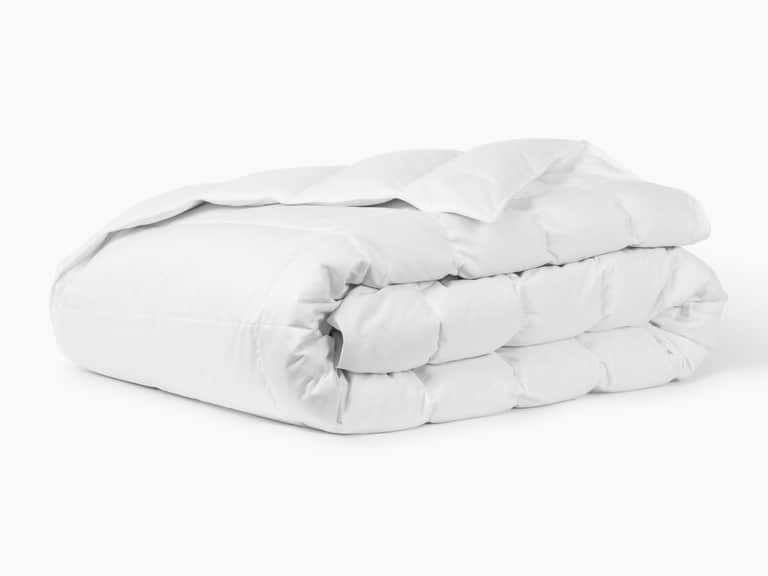
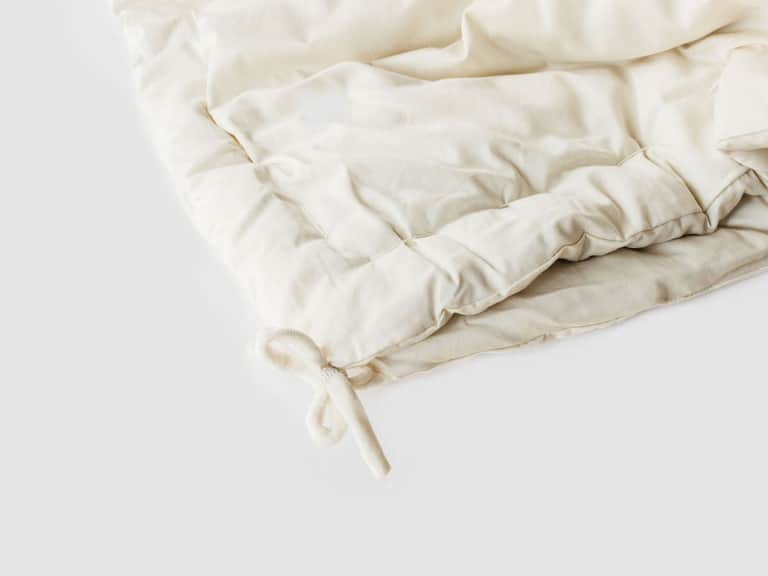
Some fills and constructions are designed with breathability or moisture management in mind, but individual outcomes vary. For example, wool comforters are commonly described as breathable and moisture-wicking; an all-season wool comforter can be configured with two layers joined by ties, allowing the setup to be adjusted. A down duvet with a cotton shell and sewn-in chambers offers a different kind of loft and warmth. Neither type guarantees a particular sleep temperature, and both should be considered alongside the cover and room conditions.
Fit is worth checking, too. A cover that is much larger than the insert may allow it to shift, while a tight fit can compress loft or make the bed feel uneven. Secure ties or loops can help hold layers in place. A stable arrangement makes it easier to judge whether the issue is warmth, texture or simply bedding that bunches during the night.
Seasonal comfort without unnecessary layers
Many people change bedding as the weather shifts, but seasonal comfort need not require replacing every part of the bed. A light duvet cover can stay in use while the insert changes, or the same duvet can be paired with an extra blanket on colder nights. The simplest strategy is often to keep layers removable and make changes gradually.
For warm periods, a smooth, lighter-feeling cover such as cotton percale may suit sleepers who prefer a crisp surface. In cooler weather, sateen or brushed cotton may feel more embracing. These are starting points, not rules. A person who sleeps cold may prefer sateen year-round; another may find brushed cotton too warm even in winter.
Think about the whole bedroom as well. Fresh air, appropriate room temperature and breathable sleepwear can affect comfort as much as the cover. If a room is persistently hot, changing fabric may have limited impact. If temperature discomfort is new, severe or accompanied by other symptoms, bedding advice is not a substitute for medical guidance.
Care affects feel, freshness and lifespan
Even a suitable duvet cover can become less comfortable if it is not cared for appropriately. Oils, perspiration, detergent residue and incomplete drying may alter the fabric’s feel. Washing on the recommended cycle and temperature helps balance cleanliness with fabric longevity. Use the product label as the authority; fibre names alone do not determine the safest care routine.
Wash a new cover before first use if the care label permits and you prefer a freshly laundered feel. Use an appropriate amount of detergent, since excess product can leave residue. Dry the cover thoroughly before making the bed, and avoid overheating it in a dryer unless the instructions allow that method. For fabrics with special finishes or delicate construction, follow any specific guidance provided by the maker.
Regularly changing and washing bedding can help keep the sleep surface fresh, but washing frequency depends on personal circumstances, climate and household needs. People with allergies, sensitive skin or particular hygiene concerns may want to follow advice from a relevant healthcare professional. A duvet cover provides a washable barrier around the insert; it does not mean the insert itself never needs care.
A simple way to compare covers
When choosing between breathable duvet covers, make a short list rather than trying to rank every fabric in the market. First, identify your main discomfort: overheating, feeling cold, a clammy sensation or an unwanted texture. Second, choose a fabric construction likely to suit that preference. Third, check whether its care requirements work with your routine.
- For a crisp, fresh feel: consider cotton percale and assess whether you enjoy its matte, structured texture.
- For a smooth, flowing feel: consider cotton sateen, especially if a softer drape matters more than a crisp hand.
- For cold rooms and cosy texture: consider brushed cotton, while keeping in mind that it may feel warm in a heated bedroom.
- For persistent overheating: review the duvet’s warmth and the room environment as well as the cover material.
- For easy upkeep: compare washing and drying instructions before deciding, not after the first laundry day.
If possible, handle fabric samples or compare covers in person. If that is not practical, look for clear descriptions of fibre, weave and finish, and check the return terms before purchasing. A product description that explains construction is more useful than one that relies only on broad claims about comfort.
A short checklist before you choose
- Do you usually sleep warm, cool or somewhere in between?
- Is the room temperature stable, or does it change during the night?
- Do you prefer crisp cotton, a smooth drape or a brushed surface?
- Is the duvet insert appropriate for the season and the room?
- Are the fibre, weave and care instructions clearly stated?
- Will the cover fit securely and work with your existing bedding?
- Can you maintain it without special care becoming a burden?
These questions turn a vague search for “cool bedding” into a more useful decision. They also help avoid a common mistake: selecting a cover based on a single promise, then expecting it to compensate for an insert or room that does not suit the sleeper.
The better choice is the one that fits your night
A breathable duvet cover is not defined by a magic thread count or one universally superior fibre. Cotton percale tends to offer a crisp, airy-feeling surface; cotton sateen brings smoothness and drape; brushed cotton adds a soft, cosy texture. The differences are real, but the effect each has on temperature is personal and depends on the rest of the bedding system.
Start with your bedroom, notice how you sleep, then choose a fabric whose feel and maintenance suit your habits. If warmth remains a problem, look at the duvet and room before adding more layers or replacing everything. Small, deliberate adjustments are often more useful than chasing an absolute promise of coolness.
The aim is not a technically perfect bed. It is a balanced one: comfortable against the skin, appropriate for the room, easy to care for and adaptable as the seasons change. When fabric, weave and duvet work together, the cover can become a quiet part of a more restful night.